
Proud to Have Been on Those Barges: ENVSonic on MRL Resources' COSCO-Built 184m Fleet
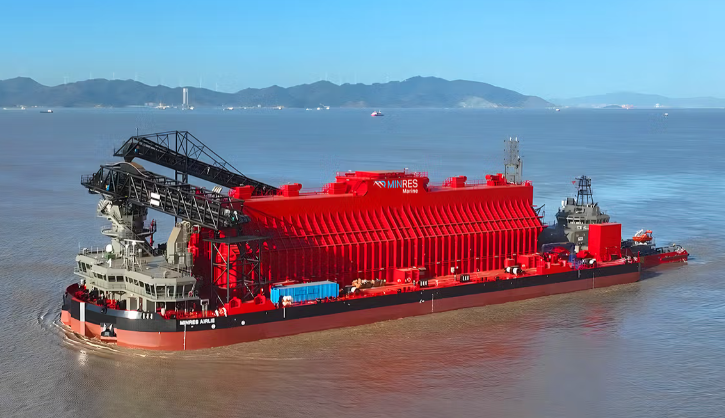
Between 2022 and 2023, Mineral Resources Limited (MRL) took delivery of four 184-metre stationary processing barges built at COSCO Shipyard in China — a build that supports MRL’s resources operations and one of the larger barge construction programmes commissioned by an Australian resources company in recent years. (See public ASX announcements and trade press coverage from 2022–2023 for MRL’s own description of the operational role.)
What’s perhaps less well known publicly: every one of those 184m barges left the yard with ENVSonic ultrasonic antifouling protecting its box coolers — and arrived in Australian waters operationally clean, ready to take up the long stationary deployment that defines them.
It’s a piece of work I’ve been wanting to write about for a while.
Why these barges mattered:
Barges of this scale are unusual in the merchant fleet. Most barges are smaller, simpler assets — towed, infrequently maintained, often treated as the lowest-maintenance member of the fleet. A 184m stationary processing barge is a different proposition. It’s a long-life piece of operating infrastructure, built specifically for a permanent role at a site, and the cost of compromised cooling performance over the asset’s life is significant — both operationally and on the regulatory biosecurity side.
A stationary processing barge in warm Australian waters is also one of the harshest possible fouling environments. There is no operational flow. The asset sits in the same body of water, drawing seawater continuously through its box coolers and cooling systems, every day of the year. Biological matter accumulates with nothing to discourage it. Without continuous protection, the asset is in a slow fight against fouling that compounds across the entire deployment life.
Specifying ENVSonic on the build sheet at COSCO meant continuous ultrasonic protection from the moment the systems were energized — through fit-out, sea trials, hand-over, the delivery passage to Australia, and now the long stationary operating life on site.
A look back, not a sales pitch:
There was a short LinkedIn post at the time, when the first pair of barges was on the water. Beyond that the work has stayed where it belongs — operational, in the engineering relationship between us and the customer.
Looking back, the MRL barge programme was one of the early signals of where the category was going. Major Australian resource operators were starting to take fouling-driven biosecurity exposure as seriously as fuel-burn — and ultrasonic antifouling, when specified at build, became the cleanest answer to both problems at once.
We’re proud to have been part of it. We’re grateful to MRL for the trust, to COSCO for the engineering rigour through the build, and to the operational teams on both sides who got four large barges across the Pacific in working order.
Looking forward:
The MRL programme set a useful precedent for how ENVSonic specifies into newbuild barges and large stationary processing assets. It informs how we now talk to operators about long-life stationary deployment — the asset profile that has the worst fouling exposure of any segment in commercial maritime, and where continuous ultrasonic protection compounds the most operational value over the asset life.
If you operate large stationary processing barges, FSO/FPSO units, floating processing platforms, accommodation barges, or any long-life asset deployed in warm coastal waters, the MRL story is a useful one to look at. Reach out — we’ll walk through it.
LINKS:
- MRL (Mineral Resources Limited): https://www.mineralresources.com.au
- MRL Sea trials complete for MinRes’ inaugural transhipper: MinRes Article
- COSCO Shipyard / COSCO Shipping: https://www.coscoshipping.com
- GLOBAtech Australia’s original LinkedIn post (delivery announcement): LinkedIn